Blog Post #12 Material Feminism

Material feminism

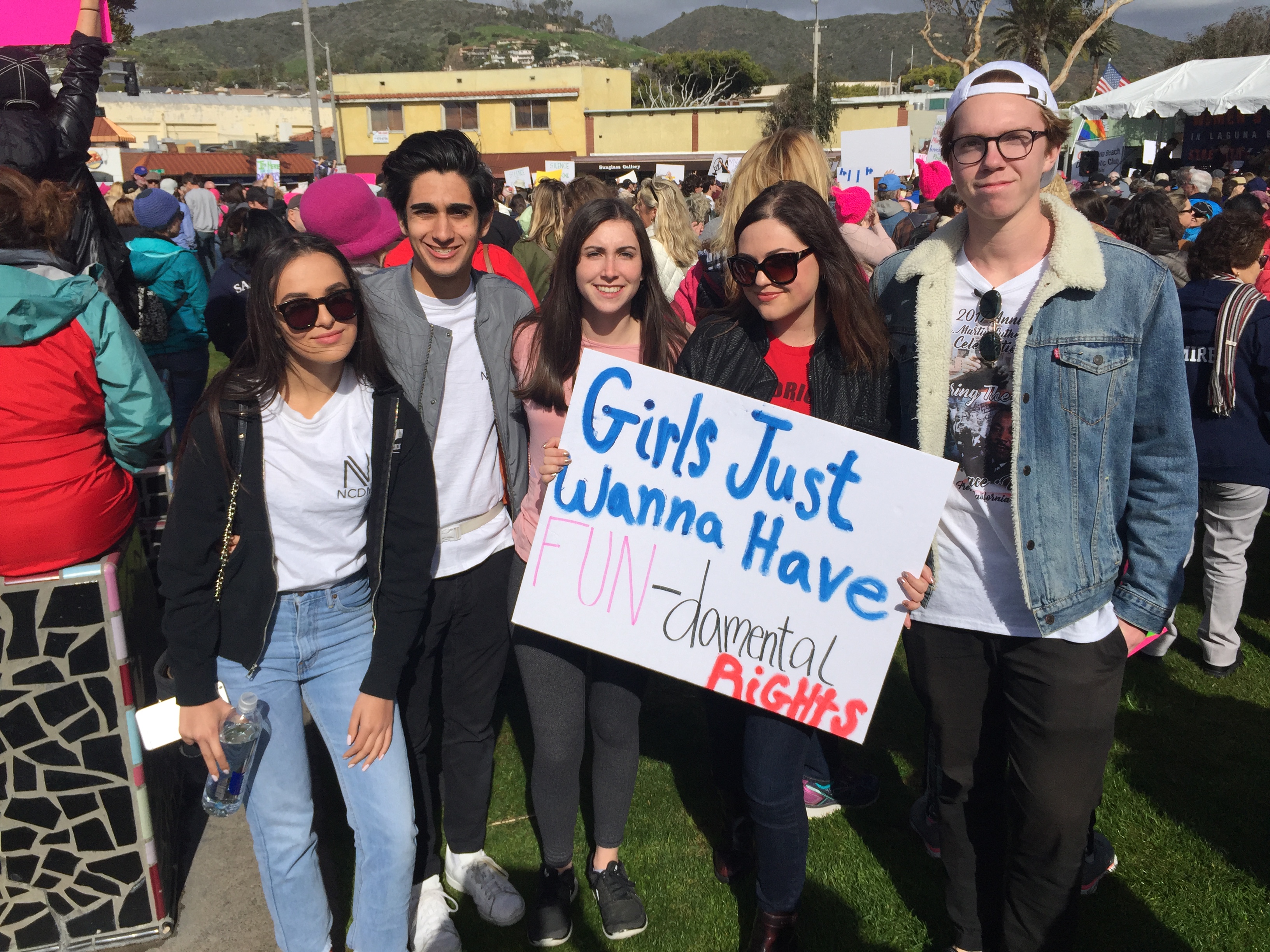
Materialist feminism, gender is seen as a social construct, and society forces gender roles, such as bearing children, onto women. Materialist feminism’s ideal vision is a society in which women are treated socially and economically the same as men. materialist feminism argues that material conditions of all sorts play a vital role in the social production of gender and assays the different ways in which women collaborate and participate in these productions. Material feminism also considers how women and men of various races and ethnicities are kept in their lower economic status due to an imbalance of power that privileges those who already have privilege, thereby protecting the status quo. Something extraordinary it offers is that Materialist feminists ask whether people have access to free education, if they can pursue careers, have access or opportunity to become wealthy, and if not, what economic or social constraints are preventing them from doing so, and how this can be changed. Therefore, these are some sort of ways they could stay left behind but still they get to see ways on how they can get their right opportunities.

Blog Post #11

Troubling Gender, Radicalising Feminism: Easy Notes on Judith ...

“It is important for me to concede, however, that the performance of gender subversion can indicate nothing about sexuality or sexual practice. Gender can be rendered ambiguous without disturbing or reorienting normative sexuality at all. Sometimes gender ambiguity can operate precisely to contain or deflect non-normative sexual practice and thereby work to keep normative sexuality intact.”-

Judith Butler proposes that gender is performative. Butler distinguishes between sex, as biological facticity, and gender, as the cultural interpretation. Butler argues that gender is best perceived as performative, which suggests that it has a social audience. It also suggests that performances of woman are compelled and enforced by historical social practice. According Butler’s theory, sexual orientation is basically a performative repetition of acts related with male or female. Consistently with her acknowledgment of the body as a historical idea, she proposes that our idea of sex is viewed as characteristic or natural in light of the fact that the body turns into its sex through a progression of acts which are reestablished, and merged through time. Personally, I can think of one example could be ‘women smoke’ and which considered as the gender performance.

What does it mean to disidentify with something? – Blog Post 9

I think that when one disidentifies with something it doesn’t necessarily mean that they find fault with or have deeply rooted dislike for whatever it is that they are unable to identify with, they simply do not align with that given belief/standpoint/or practice. You do not have to necessarily create animosity between yourself and the groups/practices hat you disidentify with however, through disidentification one is empowered to take a stance for their beliefs and overall identity. Moving to my current neighborhood 15 years ago was very uncomfortable for me. I felt the I’d never truly relate to those who I saw around me. I feel like this was probably one of my earliest instances of disidentifying with something. Needless to say, I’ve discovered some of my closest friends living here ; looks can definitely be deceiving!

Blog Post #10

Libertarians and the culture war | LibertyWorks

According to Faludi and Heywood I got their common understanding that culture war is the social clash between social gatherings and the battle for predominance of their qualities, convictions, and practices. The term is generally used to depict contemporary governmental issues in the United States, with issues, for example, premature birth, homosexuality, erotic entertainment, multiculturalism, and other social clashes dependent on qualities, profound quality, and way of life being portrayed as the major political cleavage. It also called as war between men and women abilities. Culture war is related to feminism by Radical feminism which is a theory and practice of fighting for the rights of all women and girls, regardless of whether they self-identify as transgender, and regardless of their ethnic origin or political beliefs. Indeed the fights for the rights for women significantly connecting to the meaning of culture war.

Blog Post #11

Judith Butler claims that there is no binary concept and that ultimately gender is a social construct with no definite formalities on what it means to be a “women” or a “man”. She very clearly states that the difference between what we call a man and women, is not the language, history or politics, especially it is not what our sex is. However, even though this is her main argument she still agrees that feminism does exist but has some political issues that need to be discussed. Along with that, she argues that the idea of a human identifying with just their sex is repressive and dangerous, and a lot more knowledge needs to be had in the deciding factor of what we identify as. Personally, after reading Butlers thoughts I think for a gender to be performed is for an individual to go along with the societal standards of what exhibits “masculinity” or “femininity”, because this does not define a persons gender in a sense it just defines their performance in how they want to present themselves. In my personal life, I know of many women who choose to wear boxers under their clothes instead of “feminine” under garments, which Butler would consider to be a gender performance because of the construct that only men should wear boxers.

“.

Blog Post #10

“Feminism’s agenda is basic: It asks that women not be forced to “choose” between public justice and private happiness. It asks that women be free to define them-selves—instead of having their identity defined for them, time and again, by their culture and their men.” (Faludi)

Culture wars are usually defined as the fight for dominance in values, beliefs, practices etc in all different kinds of social groups. When it comes to feminism, as written by Faludi, it is the fight against being forced to choose between public justice and private happiness. In my mind, this is referring to the idea that women have to comply by certain societal rules and standards which can very easily impact their happiness in the everyday life. It is referring to the very simple ideology that as a human, as a women, we should be respected enough to be accepted as our own individuals with our own independent thoughts, decisions, ideas, and appeals.

Blog Post #11 Judith Butler Week

Butler describes gender as an quality of a person, but as “performed” as acting in accordance to customs. Gender is how we identify ourselves and how we self-concept ourselves. Butler also believes that language/culture make up how we perceive and contextualize the world. We have created how a gender must act. She goes into detail about the notion of gender and how it plays a role into feminism. Her claim is that no one is a gender from the start, but that it deals with how we interact, behave that determine the gender. From experience, growing up I’ve been told how I should interact, dress, behave because if I don’t act like a girl then people will begin to think otherwise and that’s where bullying also comes into effect. I believe that one should behave and do what they want, for the simple matter that gender shouldn’t weigh us down and keep us secluded from doing things that doesn’t correspond with our “gender”.

Image result for gender

Blog Post 10 Culture Wars

Culture Wars were cultural conflict between social groups and a struggle for power about their beliefs and what was of value to them. Culture wars are very similar to feminism because their are still movements and protests to gain equal rights amongst women. Fauldi in his article states that there has been a sort of progression for their rights. However, many unjust situations keep occurring such as pay. Culture wars rely heavily on the belief that there is progression vs. that there isn’t.

See the source image

Apr 22: Class today and updates

Hi all,
Just a reminder that I’ll be hosting a virtual meeting of class today at 3pm. Here’s the link to the “classroom”: https://bit.ly/WGS-Shaw-20

Please–if you can–try to submit a question about the reading. I’ll maybe open up a google doc for some group work. I’ll also go over independent study/final project details. I’ll be fielding questions about Judith Butler, This Bridge…, and Disidentfications. We’ll do Toni Morrison next week.

An announcement: Based on discussion last week, I am waiving the 10% penalty for any late work for the semester. So, although it’s great when things are handed in on time (so we have something to talk abut and that you can work from for our discussions), don’t stress too much about deadlines. Focus on staying sane in these wacky times, and just try to get the work in sooner rather than later (no later than May 13).

See you at 3pm! If you want to meet with me more privately before or after, I would welcome that. Just let me know. I’ll be scheduling check-ins and conferences over the next week or two.

Don’t forget to do your weekly check in! It helps me know where you are and how I can help you.

Take care,
Gwen